
Aesthetic Breast Surgery
Your body, your choice. Learn about breast augmentation, reduction, lift, incision types and implant placement options with GC Aesthetics®.


Breast Augmentation
Also called augmentation mammoplasty, this procedure uses breast implants or fat transfer to increase the size of your breasts. It can also restore breast volume lost after weight loss or pregnancy, achieve a more rounded breast shape, or improve natural breast size asymmetry.

Breast Reduction
Also known as reduction mammoplasty, breast reduction removes excess breast fat, glandular tissue and skin to achieve a breast size more proportionate to your body and to alleviate the discomfort associated with overly large breasts (macromastia).

Breast Lift
Also known as mastopexy, this procedure removes excess skin and tightens the surrounding tissue to reshape and support the new breast contour.
It is important to discuss the exact location of any resulting scar with your surgeon. During breast augmentation the surgeon will use one of three possible incisions:

Transaxillary Incision
With a trans-axillary incision, the implants are placed through a cut in the armpit.
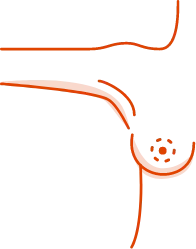
Periareolar Incision
With a peri-areolar incision, the scar will be around your areola. The incision is partially hidden by the colour change at the edge of the areola.

Inframammary Fold
With an inframammary incision, the scar will sit in the inframammary fold under the breast. The incision is concealed by the slight overhang of the breast.
Discuss the precise placement of breast implants with your surgeon in detail. You will want to know which options you have so you can ultimately be happier with your results. Implant placement depends largely on the density of your breast tissue. Together with your surgeon, you can choose between:

Subglandular Placement
The breast implant is placed over the pectoral muscle and behind the breast tissue. It may result in a shorter recovery and a shorter surgery.

Subfascial Placement
Here the implant is placed beneath the prepectoral fascia and above the pectoral muscle. It is most often recommended for very thin and athletic patients.

Submuscular Placement
The implants are placed partially or fully under the pectoral muscle. This technique delivers natural results and is typically used for women with smaller breasts.

Dual Plane Placement
In this placement the pectoralis muscle is cut, lifted, and the implant is placed under the muscle, allowing more soft-tissue coverage of the breast implants for more natural-looking results.
What should I expect during the procedure?
You and your surgeon decided on your anaesthesia, incision, breast implants and placement before surgery.
When your surgery takes place, make sure it is in a certified hospital fully equipped to care for you in the event of an emergency. This is unlikely, but it is better to be prudent and safe.
Once your anaesthesia takes effect, your Plastic Surgeon will make the incision to place the breast implants.
Depending on implant type, degree of augmentation and your body type, your surgeon will position the implants and close the incisions. You will see immediate results, although final results will emerge up to 3 months later. Remember to wear a post-operative bra for your comfort.
Who is a Candidate?
The ideal candidate for aesthetic breast surgery is at least 18 years old with completed anatomical breast development, free of unmanaged systemic disease, a non-smoker or able to abstain from tobacco for at least 4 weeks before surgery, and with realistic expectations.
During the consultation, your surgeon evaluates the following factors:
- Age and physical maturity: Breast tissue development must be complete.
- Smoking and tobacco use: One of the most important factors negatively affecting wound healing; must be discontinued at least 4 weeks before and after surgery.
- Body Mass Index (BMI): BMI values above 30 increase complication risk.
- Existing health conditions: Diabetes, hypertension, bleeding disorders, autoimmune diseases are assessed.
- Mental and emotional readiness: Realistic expectations are essential for long-term satisfaction.
Surgery is postponed for pregnant or breastfeeding women. Patients undergoing active breast cancer treatment or in the recovery phase should not undergo elective aesthetic surgery without oncologist approval.
The Consultation Process
The initial consultation is the most important step of your surgical journey. In this meeting, you and your surgeon assess your expectations, anatomical measurements and health history.
What to expect during consultation
- Detailed history: Previous surgeries, allergies, medications you take, family health history.
- Physical examination: Breast tissue structure, presence of asymmetry, skin elasticity, nipple position.
- Anatomical measurements: Breast base width, breast height, clavicle-to-nipple distance.
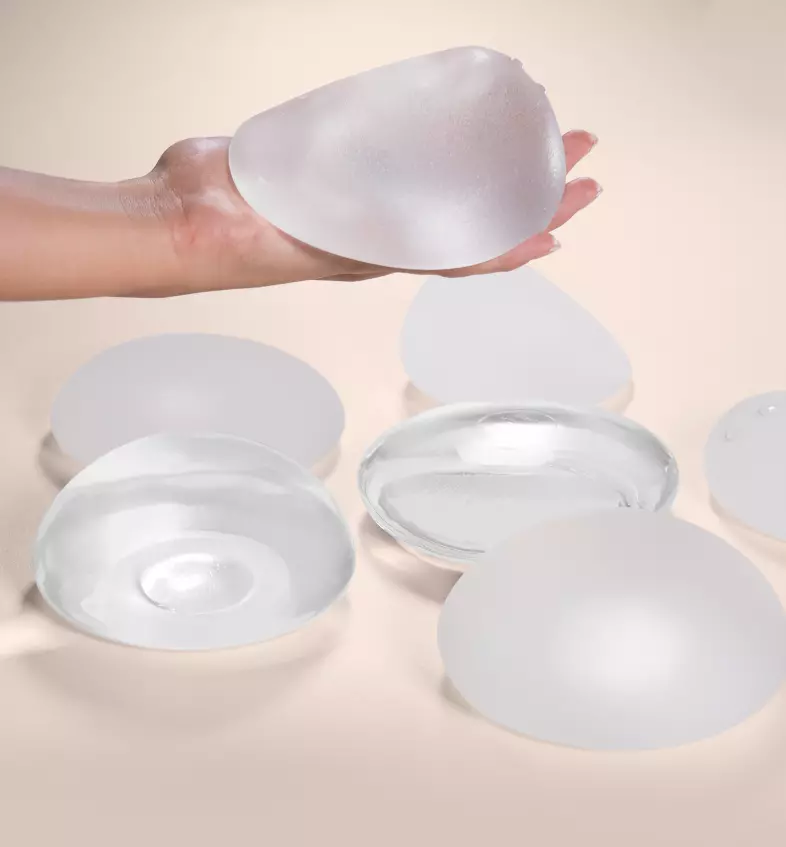
- Review of implant options: Anatomical (teardrop) and round models, projection and volume alternatives.
- 3D simulation: Some clinics offer preview of expected outcome via 3D imaging.
Questions to ask your surgeon
- Which type of implant do you recommend and why?
- How many breast surgeries have you performed, and what certifications do you hold?
- What are your complication rates?
- In which hospital will the surgery be performed, and what is the hospital's accreditation status?
- What is your post-operative follow-up protocol?
Obtaining a second and third consultation helps you choose the right surgeon and technique. To reach the GC Aesthetics® authorised surgeon list, contact our Turkey distributor.
Preparing for Surgery
For a safe and uneventful surgical experience, fully following the preparation steps set by your surgeon is essential. A typical preparation timeline:
2 weeks before
- Aspirin, ibuprofen and other NSAIDs increase bleeding risk and must not be used without surgeon approval.
- If you take blood thinners (warfarin, clopidogrel, etc.) the discontinuation period is planned with surgeon and cardiology approval.
- Cigarettes, e-cigarettes and nicotine products must be completely discontinued.
- Herbal supplements (vitamin E, fish oil, ginkgo biloba, ginseng) are stopped.
1 week before
- Blood count, biochemistry, coagulation profile, ECG and chest X-ray are obtained.
- Anaesthesia consultation is performed; allergies and prior anaesthesia reactions are queried.
- Post-surgery home caregiver planning is arranged; necessary clothing and dedicated post-operative bra should be purchased.
24 hours before
- Solid food is stopped at least 8 hours before, liquids 4 hours before surgery (per surgeon/anaesthetist instructions).
- Skin should be clean; makeup, nail polish and jewellery must be removed.
- A comfortable front-opening garment should be worn.
- No medication is taken other than what is approved by your surgeon.
On the day of surgery you should come to the hospital with a relative and, even if discharged the same day, should not drive.
Week-by-Week Recovery
The recovery process after aesthetic breast surgery varies depending on patient and surgical technique; the timeline below is offered as a reference to shape general expectations. Your surgeon's individual guidance always takes priority.
Day 0 — Immediately after surgery
Surgery time varies between 1.5–3 hours depending on anaesthesia choice and procedure. After waking, pressure sensation and mild pain in the chest area are normal. Most patients are discharged the same day; in some cases overnight observation is preferred. The dedicated post-operative bra set by your surgeon must be worn from the first minute.
Days 1–3
Pain is at its highest during this period; the prescribed pain medication is sufficient for control. Mild swelling and bruising are expected. If a drain is placed, it stays under the surgeon's monitoring until removal (usually 2–4 days). The first shower is taken with the surgeon's approval, with limited water contact.
Days 4–7 (Week 1)
Movement gradually increases — short indoor walks are recommended. Avoid raising arms above shoulder level or carrying heavy items. Most patients return to desk work on day 7; if the job involves heavy physical activity, plan a longer recovery period with your surgeon.
Weeks 2–3
Oedema and swelling visibly decrease. Light housework and short-distance driving become possible. The sports bra is used until week 6. The first outpatient follow-up is usually performed in this period; your surgeon assesses your recovery.
Weeks 4–6
Light exercise (walking, Pilates, yoga) may begin. High-impact activities (running, weightlifting, combat sports) require surgeon approval. Wound healing is largely complete; scars may still appear red.
Months 3–6
Swelling fully resolves and implants settle into their final position (dropping & fluffing process). Final aesthetic outcome becomes evident during this period. Scars begin to fade; full lightening can take 12–18 months. Inform your surgeon if you need mammography or MRI — there is an implant-specific imaging protocol.
Yearly follow-up
After the first year, annual check-ups are recommended. For GC Aesthetics® silicone implants, MRI rupture screening should follow international screening guidelines (first MRI 5–6 years post-surgery, then every 2–3 years).
Before & After Policy
Under Turkish Law 1219 on Medical Practice and the Health Ministry's Medical Advertising Regulation, patient before and after photographs may not be shared in publicly available digital channels (websites, social media, digital advertising).
For this reason our website does not display patient before-and-after imagery. During consultation, you may review closed-portfolio images released with patient privacy consent with your surgeon directly. Images are shared under limited clinical disclosure conditions where patient identity cannot be determined.
Questions?
Check out our FAQs about Aesthetic Breast Surgery